Technical SEO
Improve crawling, indexing, website architecture, mobile usability, page speed and Core Web Vitals so Google can access and understand your website efficiently.
Ericanfly is an experienced SEO agency in Malaysia providing professional SEO services for businesses that want stronger Google visibility, qualified organic traffic, leads and sustainable growth. With more than 20 years of search marketing experience, we combine proven technical SEO, content optimisation, local SEO and authority building with modern AI SEO, AEO and GEO strategies.
Quick Overview
Ericanfly SEO Malaysia Facts
Complete SEO Solutions
Our SEO Malaysia services cover the complete process required to improve Google visibility, organic traffic and qualified enquiries. We combine technical SEO, on-page optimisation, content strategy, local SEO, e-commerce SEO and authority building with modern AI search optimisation.
Improve crawling, indexing, website architecture, mobile usability, page speed and Core Web Vitals so Google can access and understand your website efficiently.
Optimise page titles, headings, content, internal links and search intent for commercially valuable keywords without relying on outdated keyword stuffing.
Develop useful service pages, landing pages and expert articles that answer real customer questions, strengthen topical authority and attract qualified visitors.
Improve visibility in Google Maps and local search results across Kuala Lumpur, Selangor, Penang, Johor and other Malaysian markets.
Optimise product categories, product pages and technical structures for WordPress, Shopify, WooCommerce and SiteGiant stores.
Strengthen your website for Google AI Overviews, AI Mode and other answer engines through clear content, entity signals and a strong organic SEO foundation.
The Shift is Here
Search now includes traditional results, local listings, AI Overviews and conversational answer experiences. A strong SEO foundation helps your content remain discoverable, while clear answers and credible brand signals improve its usefulness across newer AI-powered search features.
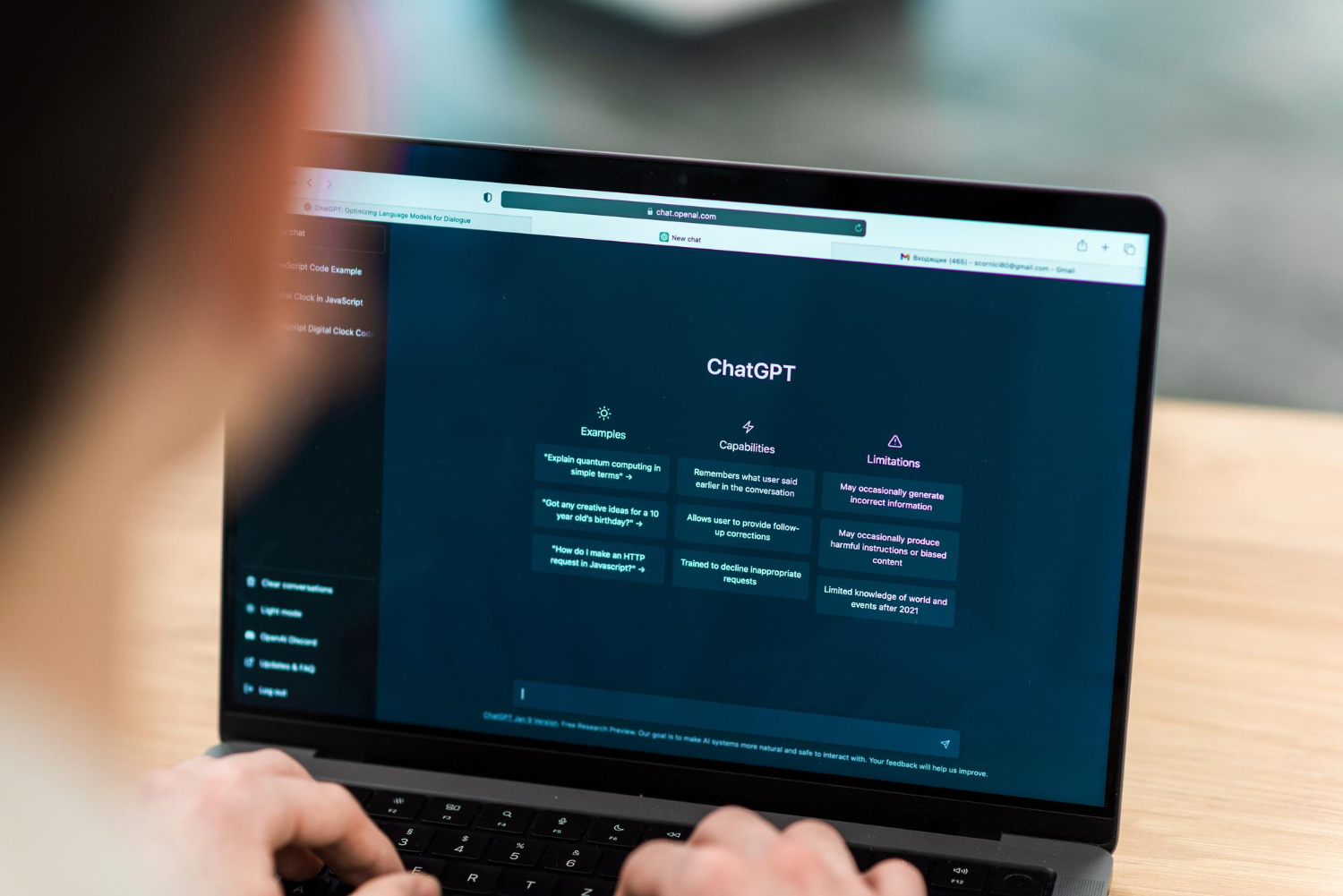
AI SEO extends traditional search optimisation by making content clear, well-structured and easy to verify. It combines technical accessibility, useful answers, entity authority and strong organic SEO to improve visibility across Google AI Overviews and other answer engines.
AI search visibility may improve as search engines recrawl and reassess your content, technical structure and overall authority. Results vary according to competition, website condition, content quality and the strength of your existing organic visibility.
AI Overviews can change how traditional organic results are displayed. Businesses should still pursue strong Google rankings while also building recognisable expertise, helpful content and consistent brand signals across the wider search journey.

Modern search happens across browsers, maps, AI assistants and conversational tools. The goal is to make your website a useful, trustworthy and accessible source wherever customers look for answers.
Key Review Takeaways
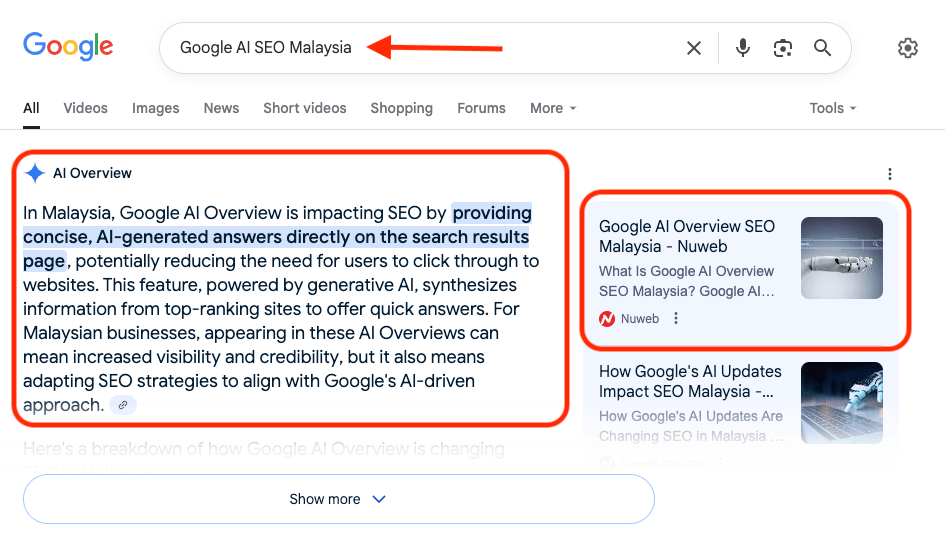
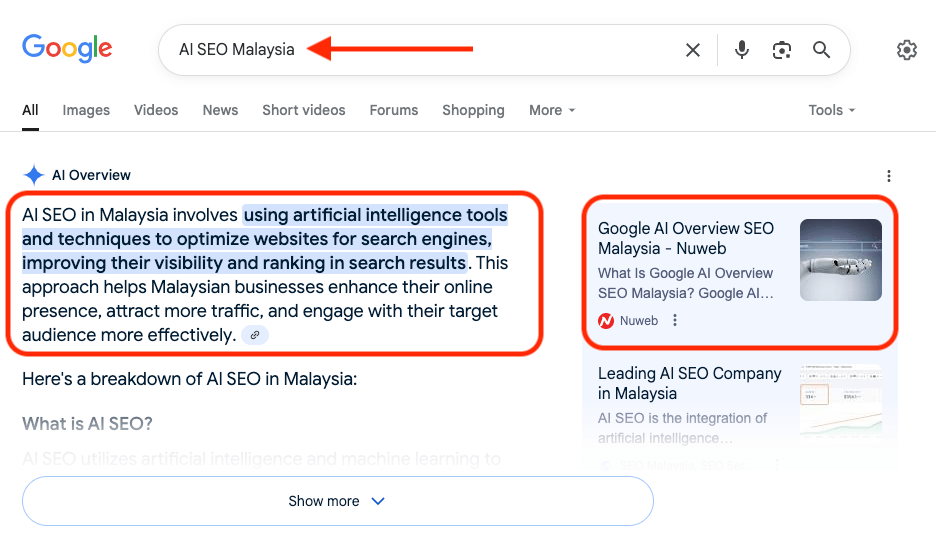
Examples of how Google's AI features can summarise and reference useful content directly within the search experience.
| Feature | Core Google SEO | AI Search Enhancement |
|---|---|---|
| Primary Goal | Build sustainable rankings, traffic and qualified leads | Increase the likelihood of visibility and citations in AI search features |
| Optimisation | Technical SEO, useful content, internal links and authority | Clear answers, entity signals and structured content |
| Search Intent | Google organic, local and image search | AI Overviews, AI Mode and conversational answer engines |
| Relationship | The essential foundation for search visibility | A complementary layer built on strong SEO fundamentals |
As an experienced SEO agency in Malaysia, Ericanfly combines more than 20 years of local search experience with technical SEO, content strategy, local visibility, e-commerce SEO and modern AI search optimisation.

Eligible SEO packages include a 100% money-back guarantee if none of the agreed target keywords reaches Google's Top 10 within 12 months, subject to the written package terms and client responsibilities.
Build stronger local visibility across KL, Selangor, Penang and Johor while preparing your content for Google AI Overviews and other answer experiences.
Proven track record boosting rankings and sales for WordPress, Shopify, SiteGiant, and WooCommerce stores across Malaysia.
Choose a core SEO plan for sustainable Google visibility, with an AI search option for businesses that also want AEO and GEO support.
Perfect for local SMEs establishing digital presence.
Ideal for businesses investing in both Google SEO and AI search visibility.
Target Google AI Overview, ChatGPT, Perplexity & Copilot.
(1,000 Credits Included)
Note: Client must sign-up for Affordable SEO Guaranteed or AI SEO Premium Google first in order to subscribe to the AI-SEO Add-On.
A practical, transparent process for improving Google visibility, qualified traffic and AI search readiness.
We analyse your website, competitors, target market and current search performance to establish realistic priorities and measurable goals.
We build a strategy covering technical SEO, content, local visibility, authority, internal linking and relevant AI search opportunities.
We implement improvements, build authority and track rankings, traffic and priority actions through transparent monthly progress reporting.

Founder & Digital Marketing SEO Consultant
Since founding Ericanfly in 2003, Eric Lau has accumulated more than 20 years of experience in SEO, Google Ads and web development. He has worked on more than 350 client campaigns, including projects for Shangri-La Hotel, Hotel Jen Penang, KDK Malaysia, SIRIM QAS, RSM Malaysia and numerous SiteGiant e-commerce clients.
Eric has spoken at the Google Digital Bites event at Google Malaysia and led SEO training for the MaGIC Effective Digital Marketing Training Program. Across completed campaigns, Ericanfly has helped rank more than 7,000 keywords on Google’s first page.
Book a Consultation with EricPractical answers about SEO services, pricing, timelines, guarantees and AI search in Malaysia.
Our services include technical SEO, on-page optimisation, keyword and competitor research, content strategy, internal linking, local SEO, e-commerce SEO, authority building, Google AI Overview optimisation, AEO and GEO.
Ericanfly’s core annual SEO packages currently start from RM13,888, while the AI-enhanced Google SEO package is RM16,888 per year. The suitable plan depends on your website, competition, target market and required scope.
Many campaigns begin showing measurable movement within three to six months, but the timing varies according to competition, website condition, content quality, technical issues and existing authority. Sustainable SEO should be evaluated over a longer period rather than judged by a fixed short-term promise.
Not necessarily. Strong organic visibility can help, but relevance, technical accessibility, useful content and clear authority signals also matter. Our approach is to improve the underlying SEO foundation rather than promise placement in a particular AI result.
We strengthen technical crawlability, content clarity, topical coverage, internal links, entity consistency and verifiable expertise. These improvements support traditional Google rankings while making content easier for AI-powered search systems to understand and reference.
Eligible packages include a 100% money-back guarantee if none of the agreed target keywords reaches Google’s Top 10 within 12 months. The guarantee is subject to the written package terms, an eligible website and completion of the client’s required actions.
Ericanfly has worked in search marketing since 2003 and combines Malaysian market knowledge with technical SEO, content strategy, local SEO, e-commerce experience and modern AI search optimisation. Clients also receive clear package terms and transparent progress reporting.
Have a question about your current rankings or website structure?
Chat with Eric on WhatsAppKnowledge Hub
Explore practical articles covering Google SEO, AI Overviews, answer engines, local visibility and search strategy for Malaysian businesses.
Explore how the shift from traditional keyword searches to conversational AI interactions is reshaping the digital marketing landscape for Malaysian businesses.
Read Article
Discover the immediate impact of Google's AI-generated answers on local search results and what critical steps you must take to maintain your rankings.
Read Article
Future-proof your business. Learn the actionable Generative Engine Optimisation (GEO) strategies required to dominate the search engine carousel in 2026.
Read ArticleGet a free SEO audit to identify the technical, content and authority improvements that can strengthen your Google and AI search visibility.
Request My Free SEO Audit(我可以讲中文 / Eng / BM / Foochow)